
Hearing loss can deeply affect communication, confidence, education, and overall quality of life. While hearing aids help many individuals, some people with severe or profound hearing loss may not benefit enough from conventional devices. In such cases, hearing device implants, commonly known as cochlear implants, offer a revolutionary solution.
With modern technology and advanced surgical techniques, ear implant procedures have become safer, more effective, and highly successful. If you or your loved one struggles with hearing despite using hearing aids, consulting a trusted ear specialist in PCMC can help you explore advanced treatment options.
What Is an Ear Implant?
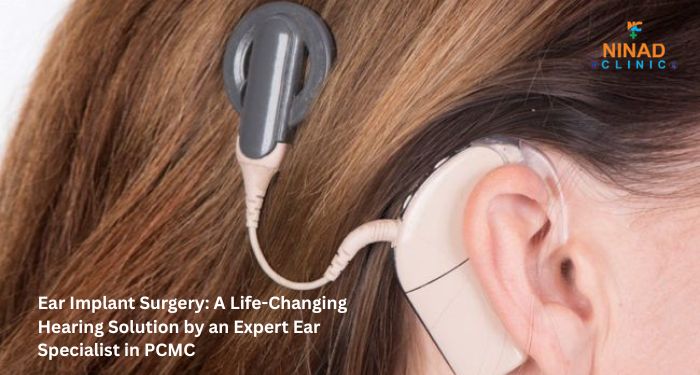
An ear implant, or cochlear implant, is a small electronic medical device that helps individuals with severe hearing loss perceive sound. Unlike hearing aids, which amplify sound, cochlear implants bypass damaged parts of the inner ear and directly stimulate the auditory nerve.
The device consists of two main parts:
-
An external processor worn behind the ear
-
An internal implant surgically placed under the skin
The implant converts sound into electrical signals that stimulate the hearing nerve, allowing the brain to interpret them as sound.
Who Needs a Hearing Device Implant?
Not everyone with hearing loss requires an implant. An experienced ear specialist in PCMC will recommend detailed hearing tests before suggesting surgery.
Candidates may include:
-
Individuals with severe to profound sensorineural hearing loss
-
Patients who gain limited benefit from hearing aids
-
Children born with significant hearing impairment
-
Adults who have gradually lost hearing ability
-
Patients with sudden hearing loss due to infection or trauma
Early evaluation is especially important in children, as timely intervention supports speech and language development.
Why Is Cochlear Implant Trending in Modern ENT Care?
With advancements in digital technology and minimally invasive surgery, cochlear implants are becoming increasingly popular.
Trending factors include:
1. Digital Sound Processing
Modern implants provide clearer, more natural sound quality.
2. Faster Recovery
Advanced surgical techniques allow quicker healing.
3. Improved Pediatric Outcomes
Children implanted at an early age show remarkable speech improvement.
4. AI-Based Sound Customization
Some devices now offer smart sound adaptation for noisy environments.
5. Long-Term Success Rate
Cochlear implants have high success rates globally.
These technological improvements make hearing restoration more effective than ever.
Symptoms That May Indicate Severe Hearing Loss
If you notice the following signs, consult an ear specialist in PCMC for evaluation:
-
Difficulty understanding speech even in quiet environments
-
Frequently asking others to repeat themselves
-
Increasing TV or phone volume excessively
-
Trouble hearing high-pitched sounds
-
Social withdrawal due to communication difficulty
-
Delayed speech in children
Ignoring these symptoms may delay proper treatment.
How Is the Implant Procedure Performed?
Cochlear implant surgery is performed under general anesthesia. The procedure usually takes 2–3 hours.
Steps include:
-
A small incision is made behind the ear.
-
The implant device is placed under the skin.
-
An electrode array is inserted into the inner ear (cochlea).
-
The incision is closed carefully.
Most patients are discharged within 1–2 days.
After healing, the external processor is fitted and programmed according to individual hearing needs.
What Happens After Surgery?
Recovery and rehabilitation are crucial for success.
Activation
The implant is activated a few weeks after surgery.
Mapping Sessions
The device is adjusted multiple times for optimal hearing.
Auditory Training
Patients undergo speech therapy or listening exercises.
Regular Follow-Up
Continuous monitoring ensures long-term effectiveness.
Hearing improvement is gradual, and consistent practice enhances results.
Benefits of Ear Implant Surgery
Cochlear implants provide life-changing benefits:
-
Improved speech understanding
-
Better communication skills
-
Increased confidence
-
Enhanced social interaction
-
Academic improvement in children
-
Professional growth opportunities
Many patients report significant improvement in their quality of life.
Risks and Safety Considerations
Like any surgery, cochlear implant procedures carry minimal risks, such as:
-
Temporary dizziness
-
Mild discomfort
-
Infection (rare)
-
Device malfunction (very rare)
Choosing an experienced ear specialist in PCMC reduces complications and ensures proper post-operative care.
Why Early Consultation Matters
Early diagnosis of hearing loss leads to better treatment outcomes. Delaying evaluation can affect speech development in children and communication skills in adults.
An expert ear specialist in PCMC will perform:
-
Audiometry tests
-
Speech discrimination tests
-
Imaging studies if required
-
Counseling for patient and family
Proper guidance helps patients make informed decisions.
Is Cochlear Implant Suitable for Children?
Yes, cochlear implants are highly beneficial for children born with severe hearing loss. Early implantation, ideally before 3–5 years of age, significantly improves speech and language skills.
Parents should seek evaluation as soon as delayed speech or hearing difficulty is noticed.
Cost and Accessibility
While cochlear implants may seem expensive, many government schemes and insurance policies now provide support. Financial assistance programs are available for eligible patients.
Consulting a reliable ear specialist in PCMC can help you understand eligibility and documentation requirements.
Final Thoughts
Hearing connects us to the world around us. Advanced hearing device implants have transformed the lives of thousands of individuals with severe hearing loss.
If hearing aids are not providing sufficient benefit, it may be time to explore cochlear implant options. Early consultation, accurate diagnosis, and expert surgical care ensure the best possible outcome.
Don’t let hearing loss limit your life. Take the first step toward better hearing today.
FAQs
1. Is cochlear implant surgery safe?
Yes, it is a safe and well-established procedure with high success rates when performed by an experienced specialist.
2. How long does recovery take?
Most patients recover within 1–2 weeks, but full hearing adaptation takes a few months.
3. Can adults benefit from cochlear implants?
Absolutely. Adults with severe hearing loss can regain significant hearing ability.
4. Is the surgery painful?
The procedure is done under anesthesia, and post-operative discomfort is usually mild.
5. Will hearing become completely normal?
While hearing may not be identical to natural hearing, most patients experience significant improvement.
6. How long does a cochlear implant last?
The implant is designed for long-term use and can function for many years with proper care.
7. When should I consult an ear specialist in PCMC?
If you or your child has severe hearing difficulty or limited benefit from hearing aids, seek evaluation immediately.